Program Overview
Spend 3 or 6 weeks studying at one of the best Universities in the world – gain credit while experiencing a global city and campus like no other!
As a UCLA ‘summer’ (July) session student you have access to hundreds of academic courses, on and off campus living options, all of the university facilities, including multiple gyms, pools, libraries…..everything you need!
Start getting excited!
Attend one of the highest ranked universities in the world – UCLA was ranked the #1 public university and #20 among all national universities in the 2021 U.S. News & World Report Best Colleges rankings. UCLA also ranked #9 out of 100 universities in the Times Higher Education World Reputation Rankings (2020) and the #15 best university in the world (2021) by U.S. News & World Report.
Opportunity to be a part of a university that receives more student applications than any other in the US – actually make that the world! This is the university that students dream of attending, and as a CISaustralia student you will have that opportunity.
Choose to study from a multitude of disciplines – business, management, finance, accounting, humanities, the arts, social science, sociology, anthropology, history, communications, journalism, health and health related fields, IT, engineering and more.
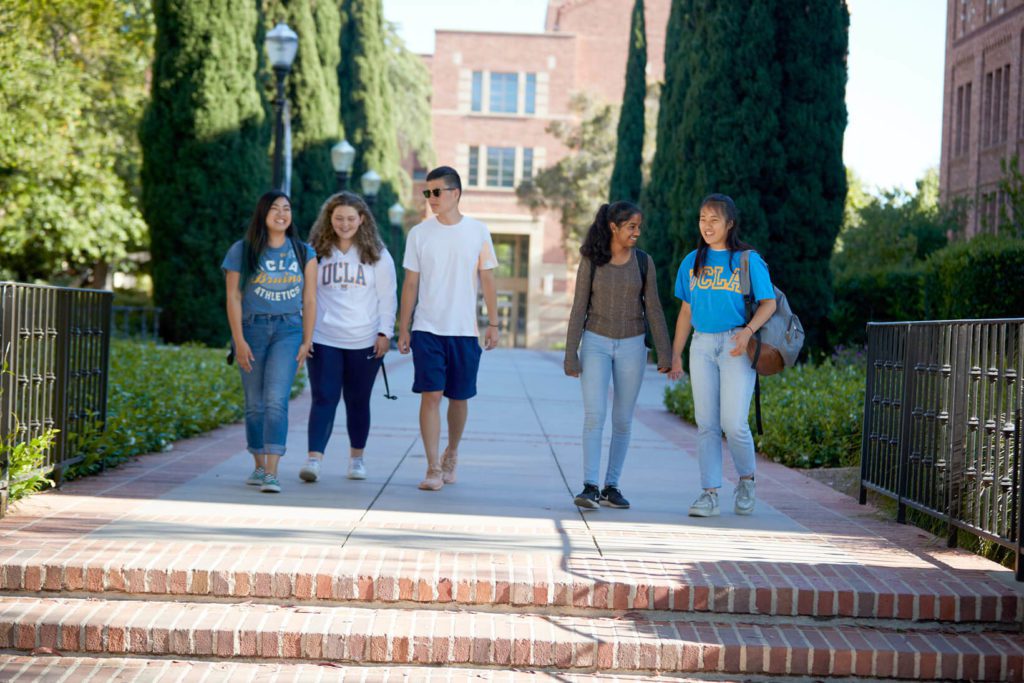
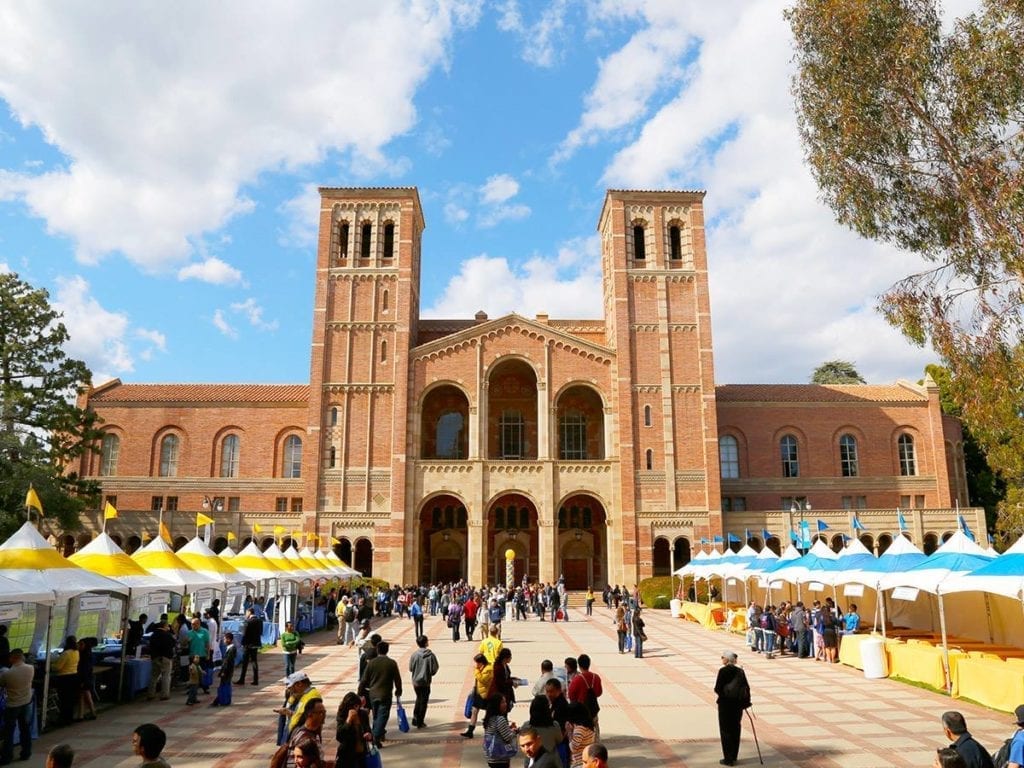
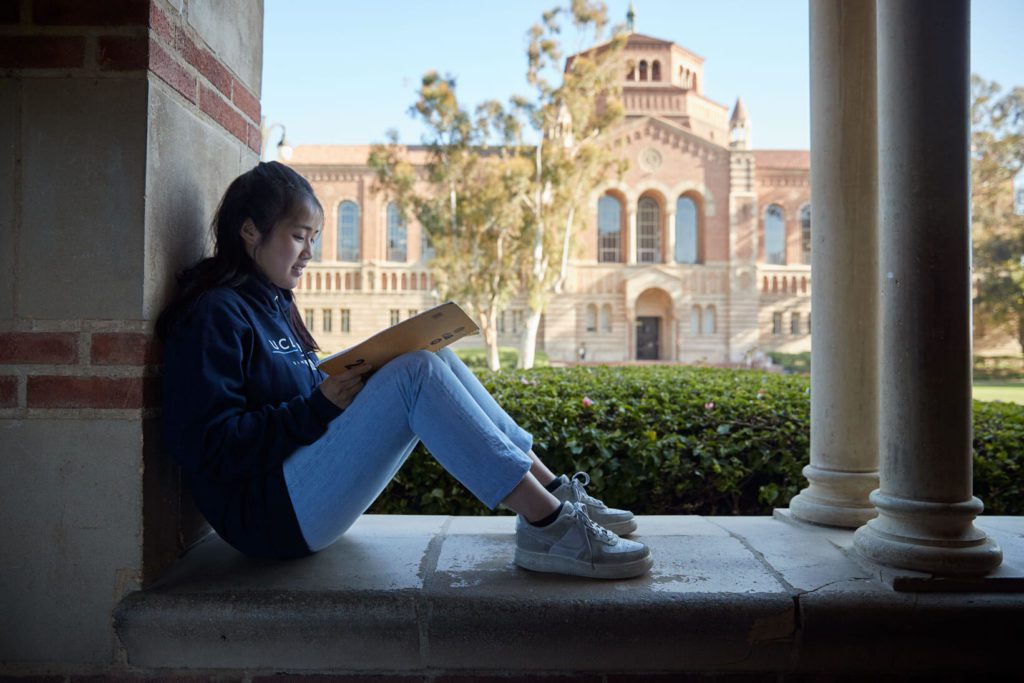
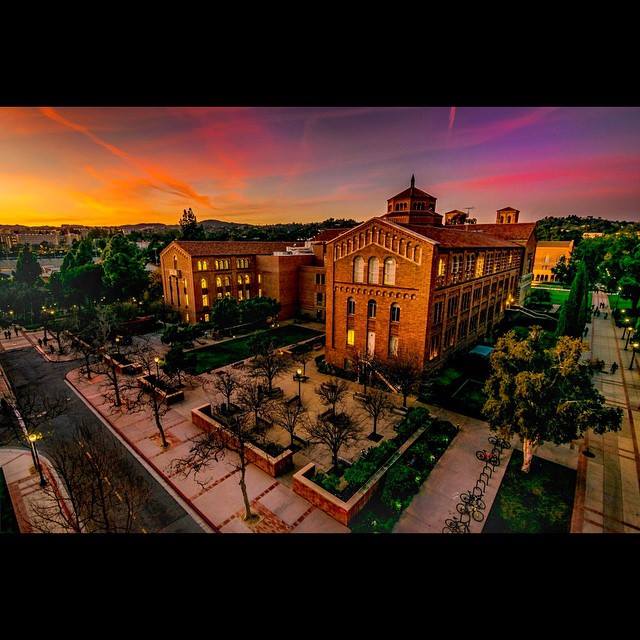
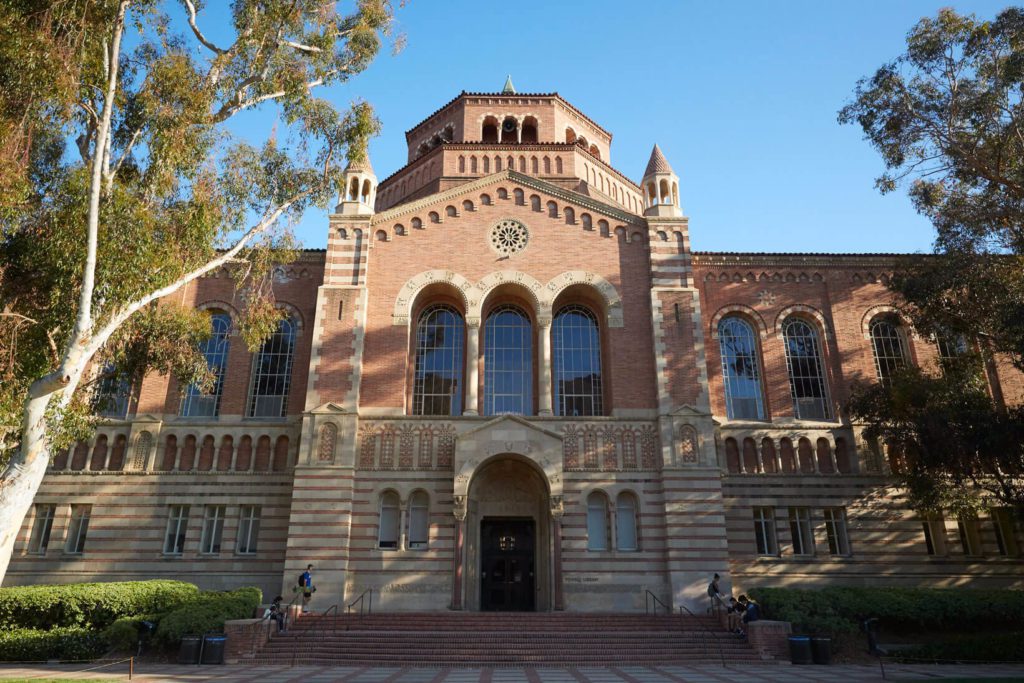
UCLA has everything you could possibly need to have an interesting and fun-filled Aussie winter (US summer) – beginning with its lush landscaping and impressive architecture, the campus is an experience in itself – add to this modern residential halls, libraries, world class athletic facilities, a multitude of entertainment opportunities and you realise that a US summer (July) session at UCLA is not only academically rewarding but also a great place to spend 3 or 6 weeks of your Australian winter!
Live and study in the entertainment capital of the world – LA. It’s a cultural mecca boasting more than 300 museums, not to mention a paradise of good weather. LA has an average of 284 – 312 days of sunshine every year (not all the authorities can agree). Let’s just say that it’s sunny a lot! Compare this to 185 sunny days per year in Melbourne or even 261 for Brisbane!
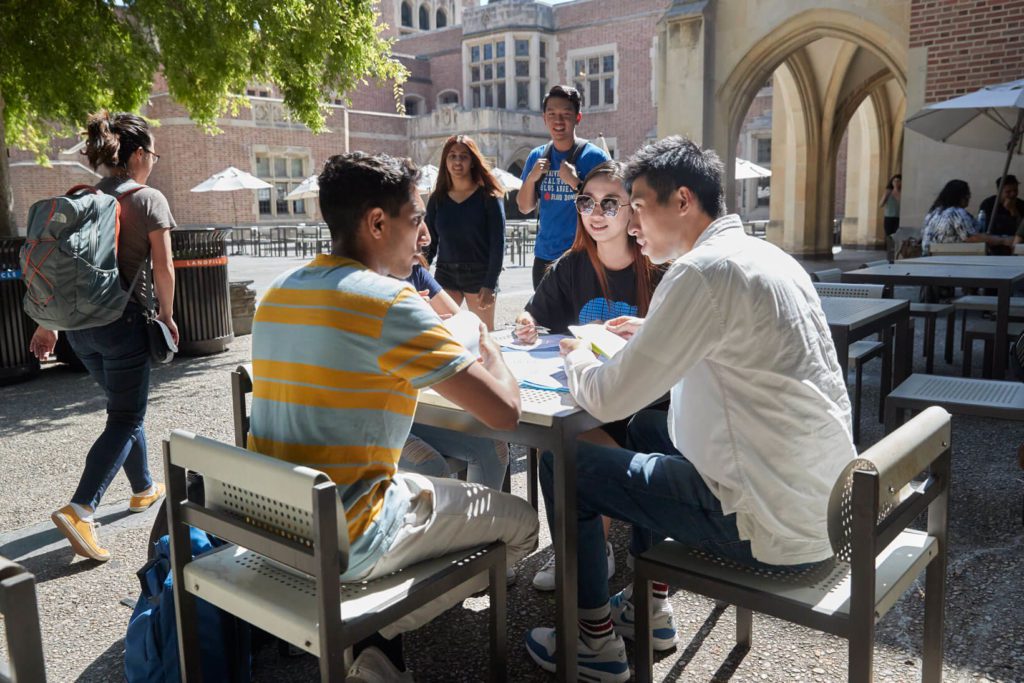
Study in a welcoming environment that appreciates diversity and a global perspective – the UCLA campus has more than 17,000 US students and more than 1,300 international students enrolled over the US ‘summer’ session.
Enjoy summer in LA – experience outdoor concerts at the Hollywood Bowl and the Greek Theater. Many activities in the city are free, including stargazing at the Griffith Observatory, hipster watching in Silver Lake and outings to the mountains and beaches.
Highlights
LA and UCLA have it all! You will have plenty of free time to check out some of the awesome things you can discover firsthand on your own during your program.
- Amazing University in a beautiful, inspiring setting – there is a reason why UCLA receives more applications than any other university in the world!
- 3 or 6 weeks living and experiencing all LA has to offer – you may wish to plan weekend trips to Disneyland, Magic Mountain, Universal Studios, spend time walking down Santa Monica Boulevard, window shopping in Beverly Hills, people watching in Venice Beach and catching a Dodgers baseball game
- Gain credit for 1 or 2 academic courses that are available to full-time UCLA students during the academic year
- Be guided by world class lecturers and professors – UCLA boasts a research focus that is envied by most institutions around the globe
- Choose from 200+ UCLA courses on the 6-week session (or select course/s on offer for the 3-week session)
- Meet students from around the world – create a lifelong network of like-minded and motivated friends
- All the amazing places you can visit from your base in LA! Places like Las Vegas, Yosemite National Park, San Francisco, San Diego and even Mexico
- Enjoy being a part of arguably the entertainment capital of the world, LA is a cultural mecca boasting more than 300 museums!
- While Australia is in the middle of winter, take 3 or 6 weeks out in the Californian summer
- Try out new restaurants, visit the tourist attractions or sit back and chill out on the beach
Choose Your Course
UCLA has one of the strongest education brands in the USA and globally. UCLA is highly ranked and sought after by students worldwide and it receives the most applications of any university in the world!
Business Insider has ranked UCLA as having the most driven students in the world, boosting the school’s prestige with respect to recruiting and hiring.
As an international student at UCLA, you have many of courses to choose from, from music and neuroscience, to dance and design, from psychology to Film & TV and economics – the options are phenomenal. Attending the UCLA Summer Session means that you are able to enrol in academic courses that are exclusively available to full-time UCLA students during the academic year and you learn from expert instructors that represent UCLA’s academic rigor and excellence.
Course Load:
- 1 course (4 US credits) on the 3-week session (1 Course Available)
- 2 courses (8 US credits) on the 6-week session (100+ Courses Available)
UCLA is very clear that students MUST be enrolled as a full-time student (4 US credits per 3 weeks or 8 US credit per 6 weeks) to keep their valid student visa.
- UCLA Summer Sessions offer on-campus and online courses. International students at UCLA are encouraged to take all on-campus courses where possible. If required international students may take up to 50% of their course load online (the credit ratio must not exceed 50% online units for visa purposes).
- Depending on your Australian university, “courses” may be referred to as “subjects” or “units”.
- Each course/subject/unit you undertake on a CISaustralia program is designed to be a full-time, semester course that has been condensed to fit into an intensive, short-term program. As such, for any 1 course you study abroad, you should receive the credit points for 1 full-time course/subject/unit at your Australian university.
- Many universities work off of a 1-for-1 equivalency (1 course abroad = 1 course in Australia), but ultimately credit approval is the decision of your faculty and Australian university.
- CISaustralia strongly recommends that you have any overseas courses pre-approved for academic credit before you depart for your program. Some documentation that may be useful are the course outline/syllabus, program overview and the contact hours.
- Please be aware that the courses listed below are subject to change and cannot be guaranteed year on year.
- Your CISaustralia Program Advisor can assist with any questions or details your university requires.
Academic Requirement: To qualify for this program, students must be in good academic standing with a GPA of 4.0 (out of 7) or equivalent. If your current GPA falls below the requirement, you may still be considered for the program however you will need to be prepared to provide supporting documentation. Please contact us to discuss your situation and we will work with you to help find another suitable program if required.
How to Choose Your Courses: Now this is the fun part. Please see below links for course information and syllabi. Once you have applied for your CISaustralia program we will require you to submit your course preferences for enrolment.
Course Descriptions:
Session 1 (3 weeks) offers 1 course
- COMM 187 – Ethical and Policy Issues in Institutions of Mass Communication (4 US Credit points)
- Click here for Session 1 Course Syllabus
- Note: There is only 1 course available for the 3 week UCLA program.
Session A (6 weeks) offers over 100 in person courses and 200+ online course!
Click here for the course schedule and syllabi for UCLA Session A: 6 weeks
- Note: Online courses are listed as a reference. International students at UCLA are encouraged to take all on-campus courses where possible. If required international students may take up to 50% of their course load online.
- For Session A, please ensure you have 6-8 course preferences approved by your university if seeking academic credit. At UCLA, some courses fill up very quickly, and they do make occasional late changes to offerings for Summer School which are out of our control. You may also have timetable clashes, so the more options you have the better!
- The Session A (6 weeks) program fee includes the standard 8 US credits. In Session A you will be studying two (2) subjects (usually 4 US credits each), however, some courses listed are worth 5 US credits. If you are planning to choose one of these, please be aware that there is an extra fee of approximately AU$649, per credit, over and above 8 US credits.
- Please note that UCLA does not enforce specified prerequisites for CISaustralia students, however we strongly recommend you have a background in the area of study for your preferred courses.
- It is your responsibility to make sure any course changes undertaken at any time, including when you are in the U.S. are pre-approved by your University in Australia.
- On the first day of class your instructor will usually let you know what textbooks you need to buy. Most assigned textbooks will be available for purchase at the UCLA Bookstore.
Projects in acting for television, video, and film.
Pre-requisite: course 1A.
Drawing as both independent expressive medium and as means of visualization.
Exploration of techniques, methods, and process of music production and larger issues in art of making music. Students learn how to foster and capture performance and emotion in music through variety of methods and tools, including artistic direction in studio and choices made in sound, arrangement, and application of technology.
Beginning-level study of ballet as movement practice.
Beginning-level study of variable movement practices.
Introduction to ceramic materials and processes, with emphasis on personal and cultural expression in ceramic media. Discussion of ceramics in contemporary artistic practice and social history of ceramic art.
For drawing, exploration of relationship between concept and image creation while fostering development of sound drawing and observation skills. For color, exploration of development of fundamental skills in mixing and applying pigments with brush on watercolor paper, as well as use of computer as tool for working with colors. Combination of painting and software to be predominant way of exploring and presenting ideas regarding color.
Introduction to concept of interactivity and field of media art that follows history of computer as media for artistic exploration in relation to print, animation, and interactivity. Discussion of potential and ideas related to interactivity, with focus on required skills for creating interactive work. Development of programming skills in service of creating examples of media art. Concepts and skills taught enhance student ability to excel in future courses about Internet, animation, interactive media, and game design. Discussion and readings on four themes–form/programming, motion, interactivity/programming, and interface.
Learning and employment of craft of songwriting. Examination, analysis, and implementation of song structure, lyric and melody writing, arranging, orchestrating, and recording techniques. Evolution of songwriting in modern society since advent of phonograph player/radio; how songs and society affect and reflect one another; how this has informed songs and songwriters.
Introduction to current music industry. Overview of career paths, monetization strategies, organizational behavior, and entrepreneurial thinking. Designed to serve as gateway for music industry degree programs. Students familiarize themselves with basic functions of industry that are covered in greater detail in upper-division coursework.
Exploration of issues in the business side of design media arts careers–as a freelancer, full-time staffer, or one’s own studio practice. Topics include understanding common studio structures and roles, developing studio credentials, billing and booking practices, proposal and contract writing, pricing models, and copyright and other legal matters. Consideration also of shifting studio processes, interviewing tips, negotiating, and other workplace issues. Features occasional guest panelists.
Songwriting workshop and guided-research practice that offers structure for collaborative development of new compositions designed to offer enhanced therapeutic benefit to listeners and participants. Study is rooted in transdisciplinary scholarship, orienting itself toward archives, research, and literature that study healing strategies drawn from diverse range of music-based creative and therapeutic practices. Open to students from all fields related to human health including dance, education, music, music therapy, neuroscience, psychology, public health, and other allied disciplines.
Pre-requisite: course 101 or 104.
Selected topics in design and media arts explored through variety of approaches that may include projects, readings, discussion, research papers, and oral presentations. Topics announced in advance.
Pre-requisite: course 101 or 104.
Introduction to theories of three-dimensional form, spatial design, and lighting, using three-dimensional visualization and video tools. Tools originally designed for motion to be used to construct form. Use of aspects of time, such as speed and duration, to contemplate form and interaction. Exploration of virtual versus real form.
Focus on three typographic basics: letter, text, and grid. Introduction to fundamentals of typography. Assignments designed to develop understanding of form, scale, and shape of letters as single elements and as texture in layout. Emphasis on grid (structure and layout) and information hierarchy to create successful typographic messages.
Voice instruction for singers at beginning to intermediate level. Exploration of fundamentals of vocal technique, including overview of basics of proper breath control, resonance, care of voice, diction, and interpretation. Beginning vocal repertoire used as vehicle for understanding these concepts.
Pre-requisites: courses 21, 22, 24, 25, 28, and 101 or 104.
Online interaction today focuses on information through living, social platforms. Study goes beyond an average user’s perspective to critically examine the web through historical, political, and social lenses. Students are encouraged to holistically approach the web and its constituent code as a living kit of parts to be harnessed in novel and innovative ways. Examination of leading concepts of people-centered interactive design. User interface (UI) designers are focused on the design of the tool, while user interface (UX) designers are focused on a person’s experience of that tool. As digital technology industries rapidly alter ways of doing and thinking, design can amplify, shift, comment on, and/or criticize these changes. The role of designers today is to style and shape content, extracting information from abstract datasets, writing scenarios, and creating systems, all with a critical eye. Students are trained to research, analyze, prototype, and develop design concepts for digital media for distinct social and cultural contexts.
Pre-requisites: courses 21, 22, 25, and 101 or 104.
Focus on relationship of type to content, image, and materials. Acquisition of knowledge of and sensitivity to typography in context of complex communication problems in print and digital media. Research, concept and content development, and articulation of methodology for visualization.
Pre-requisite: English Composition 3 or 3H or English as a Second Language 36.
Emphasis on learning specific skills, incorporating technical description, historical contextualization, subjective reaction, and certain stylistic conventions necessary in writing about music. Satisfies Writing II requirement.
Beginning-level study of yoga.
Study of entrepreneurial communication from foundations in internal and external communication and development of data analysis, interpretation, and presentational skills utilized in existing, as well as in development of, contemporary innovative businesses.
Pre-requisites: course 1, Mathematics 31A, 31B, with grades of C or better.
Laws of demand, supply, returns, and costs; price and output determination in different market situations.
Pre-requisites: Mathematics 31A, 31B, with grades of C or better. Not open to students with credit for former Statistics 11. Introduction to theory and practice of mathematical statistics with emphasis on its use in economics. Introduction of basic statistical concepts such as random variables, probability distributions, estimation, confidence intervals, and hypothesis testing.
Exploration of issues in the business side of design media arts careers–as a freelancer, full-time staffer, or one’s own studio practice. Topics include understanding common studio structures and roles, developing studio credentials, billing and booking practices, proposal and contract writing, pricing models, and copyright and other legal matters. Consideration also of shifting studio processes, interviewing tips, negotiating, and other workplace issues. Features occasional guest panelists.
Topics are organized around cultivating principles of coaching and leadership and their applications in practice. Study exposes students to various thinkers and concepts in coaching and leadership through readings, presentations, guest speakers, and seminar discussions. Students are encouraged to apply these principles in practice. Topics emphasize ethic of social justice and how equity, inclusion, and diversity can be fostered through coaching and leadership.
Analysis of how following personal lives of media-created celebrities impacts self-esteem, connectedness, and personal relationships from cultural studies and social sciences perspectives, and how entities cultivate celebrity for financial gain. Topics include celebrity gossip and privacy, news sharing, public relations, and impact of social media on fan support, image construction, and damage control.
With lectures, screenings, and demonstrations, study of principles of digital cinematography. How tools and techniques affect visual storytelling process. Topics include formats, aspect ratios, cameras, lenses, special effects, internal menu picture manipulation, lighting, composition, coverage, high definition, digital exhibition, filtration, multiple-camera shooting.
Study of entrepreneurial communication from foundations in internal and external communication and development of data analysis, interpretation, and presentational skills utilized in existing, as well as in development of, contemporary innovative businesses.
Through discussions, screenings, demonstrations, and guests, exploration of script, previsualization, directing actors, directing camera coverage in relationship to story, practical on-set directing, and directing for camera.
Films often provide commentary about public issues. Examination of how films communicate to large audiences about history, society, and politics. Critical evaluation of these works to understand power and limitations of films as social persuasion.
Introduction to concept of interactivity and field of media art that follows history of computer as media for artistic exploration in relation to print, animation, and interactivity. Discussion of potential and ideas related to interactivity, with focus on required skills for creating interactive work. Development of programming skills in service of creating examples of media art. Concepts and skills taught enhance student ability to excel in future courses about Internet, animation, interactive media, and game design. Discussion and readings on four themes–form/programming, motion, interactivity/programming, and interface.
Survey of recent scientific approaches to dyadic communication and relationships. Surveys selection of experimental, observational, and quantitative methods, and how they can be applied to key issues in dyadic communication and interpersonal relationships. Topics include recent technological techniques for measuring and influencing dyads, including role of peripheral devices such as phones or other wearable devices. Consideration of dyadic processes including influence, mimicry, leadership, active listening, and more. Consideration also of how findings apply beyond dyads to teams.
Structural analysis of feature films and development of professional screenwriters’ vocabulary for constructing, deconstructing, and reconstructing their own work. Screenings of films and selected film sequences in class and by assignment.
Advancement of students’ fluency in conversational English while increasing their awareness of American popular culture. Primer on American-style colloquial English and nuances of contemporary customs and values offered through guided immersion in popular cinema.
Pre-requisite: Satisfaction of Entry-Level Writing.
Examination of foundations of communication and public speaking. Consideration of number of basic theories related to study of communication and development of skills to enable composition and delivery of speeches in accordance with specific rhetorical concepts. Improvement of ability to analyze, organize, and critically think about communicative messages while becoming better equipped to articulate ideas.
Pre-requisite: course 101 or 104.
Selected topics in design and media arts explored through variety of approaches that may include projects, readings, discussion, research papers, and oral presentations. Topics announced in advance.
Pre-requisites: courses 21, 22, 25, and 101 or 104.
Focus on relationship of type to content, image, and materials. Acquisition of knowledge of and sensitivity to typography in context of complex communication problems in print and digital media. Research, concept and content development, and articulation of methodology for visualization.
Theoretical and empirical overview of Chicana/Chicano educational issues in U.S., with special emphasis on disentangling effects of race, gender, class, and immigrant status on Chicana/Chicano educational attainment and achievement. Examination of how historical, social, political, and economic forces impact Chicana/Chicano educational experience.
Study of how U.S. educational system both promotes socioeconomic opportunities and maintains socioeconomic inequalities: historical and theoretical perspectives on role of education in U.S. society; trends in educational attainment; ways in which family background, class, race, and gender affect educational achievement and attainment; stratification between and within schools; effects of education on socioeconomic attainment, family, health, attitudes, and social participation; educational policies to improve school quality and address socioeconomic inequalities.
Topics are organized around cultivating principles of coaching and leadership and their applications in practice. Study exposes students to various thinkers and concepts in coaching and leadership through readings, presentations, guest speakers, and seminar discussions. Students are encouraged to apply these principles in practice. Topics emphasize ethic of social justice and how equity, inclusion, and diversity can be fostered through coaching and leadership.
Epidemiology is interdisciplinary science with goal of identifying and describing patterns of disease occurrence, identifying determinants of disease, and evaluating disease prevention and health care treatment efforts. With its focus on human populations, epidemiology is directly linked with public health research, policy, and practice. Introduction to fundamental definitions, concepts, methods, and critical thinking used in epidemiologic study. Designed to lay foundation for future study to evaluate factors related to health outcomes in human populations using epidemiologic principles.
Pre-requisite: course 14A or 20A with grade of C- or better. Corequisite: course 14B or 20B.
Use of balance, volumetric techniques, volumetric and potentiometric analysis; Beer’s law, applications for environmental analysis and materials science.
Pre-requisite: course 14A or 20A or 20AH with grade of C- or better. Corequisite: course 14B.
Introduction to volumetric, spectrophotometric, and potentiometric analysis. Use and preparation of buffers and pH meters. Synthesis and kinetics techniques using compounds of interest to students in life sciences.
Structural survey of human body, including skeletomuscular, nervous, circulatory, respiratory, digestive, and genitourinary systems. Laboratory includes examination of human cadaver specimens.
Understanding of human body, its organization from molecular to cellular to tissues and organs, and how component parts function in integrated manner to permit life as we know it.
Beginning-level study of yoga.
Multidisciplinary examination of history of Asians and Pacific Islanders in U.S.
Interdisciplinary survey of diverse historical experiences, cultural factors, and ethnic/racial paradigms, including indigenousness, gender, sexuality, language, and borders, that help shape Chicana/Chicano identities. Emphasis on critical reading and writing skills.
Multidisciplinary examination of representation, ideologies, and material conditions of Chicanas/Chicanos, including colonialism, race, labor, immigration, poverty, assimilation, and patriarchy. Emphasis on critical reading and writing skills.
Advancement of students’ fluency in conversational English while increasing their awareness of American popular culture. Primer on American-style colloquial English and nuances of contemporary customs and values offered through guided immersion in popular cinema.
Pre-requisite: English Composition 3 or 3H.
Investigation of relationship of literature to one or more other arts, including music (opera, musical theater, popular music, jazz), painting, photography, other visual arts, sculpture and other plastic arts, performance art, dance, architecture. Topics vary and may include not only English literature but foreign literature in translation.
Designed for nonnative speakers of English to increase fluency and vocabulary while improving presentation skills, language usage, reasoning, style, and delivery. Conversation and pronunciation practice. Focus on theory and practice of public speaking, including selection of content, organization of ideas, language, and delivery. Practice in extemporaneous and manuscript speaking. Critical analysis of speeches in both contemporary and historical settings. Special emphasis on group discussions, evaluations, practice of both public and private speaking skills.
Exploration of role of spirituality and mindfulness practice in labor and immigrant rights movements. Focus on teachings of St. Francis of Assisi, Mahatma Gandhi, Martin Luther King, Thich Nhat Hanh, and other spiritual leaders. Uses specific case studies and workshop experiences. Includes videos and guest lectures by scholars and activists who integrate their spirituality into their daily work.
Coverage of children three to eight years old. Topics include physical, cognitive, social, and emotional development of children, developmentally appropriate practices, child care quality, role of educator/caregiver, and other related issues.
Pre-eequisites: courses M101A and M101B (M101B may be taken concurrently), or Psychology 10, 100A, 100B, and 115. Not open for credit to students with credit for Psychology 116B.
Designed for Psychobiology, Psychology, and Neuroscience majors. Laboratory experience with various topics in behavioral neuroscience. Hands-on experience with important methodology and experimental approaches in neuroscience.
Analysis of how following personal lives of media-created celebrities impacts self-esteem, connectedness, and personal relationships from cultural studies and social sciences perspectives, and how entities cultivate celebrity for financial gain. Topics include celebrity gossip and privacy, news sharing, public relations, and impact of social media on fan support, image construction, and damage control.
Multidisciplinary examination of history of Asians and Pacific Islanders in U.S.
Survey of recent scientific approaches to dyadic communication and relationships. Surveys selection of experimental, observational, and quantitative methods, and how they can be applied to key issues in dyadic communication and interpersonal relationships. Topics include recent technological techniques for measuring and influencing dyads, including role of peripheral devices such as phones or other wearable devices. Consideration of dyadic processes including influence, mimicry, leadership, active listening, and more. Consideration also of how findings apply beyond dyads to teams.
Interdisciplinary survey of diverse historical experiences, cultural factors, and ethnic/racial paradigms, including indigenousness, gender, sexuality, language, and borders, that help shape Chicana/Chicano identities. Emphasis on critical reading and writing skills.
Multidisciplinary examination of representation, ideologies, and material conditions of Chicanas/Chicanos, including colonialism, race, labor, immigration, poverty, assimilation, and patriarchy. Emphasis on critical reading and writing skills.
Pre-requisite: Life Sciences 2 or 7C. Corequisite: course M101A.
Overview of human nervous system, brain development, anatomy and function, pathology. Introduction to brain circuits involved in fear and anxiety, memory, sensory, motor activities.
Theoretical and empirical overview of Chicana/Chicano educational issues in U.S., with special emphasis on disentangling effects of race, gender, class, and immigrant status on Chicana/Chicano educational attainment and achievement. Examination of how historical, social, political, and economic forces impact Chicana/Chicano educational experience.
Pre-requisite: English Composition 3 or English as a Second Language 36. Not open for credit to students with credit for course 101.
Creation of critical framework for understanding concept of disability from sampling of disciplinary perspectives. Organized around productive and central tension in disability studies–between disability as lived subjective experience that is both individual and communal, and disability as objective, medical, legal, and sometimes stigmatized category. Students encouraged to make connections between units and to create their own perspectives on disability in field that defines itself by how it changes.
Pre-requisites: course 100A, Life Sciences 2 or 7A or 15. Not open to students with credit for course M117A (or Molecular, Cell, and Developmental Biology M175A or Neuroscience M101A or Physiological Science M180A).
Designed for juniors/seniors. Nervous system anatomy, physiology, pharmacology, and their relationship to behavior.
Pre-requisites: courses 10, 100A.
Interrelationships between the individual and his social environment. Social influences on motivation, perception, and behavior. Development and change of attitudes and opinions. Psychological analysis of small groups, social stratification, and mass phenomena.
Study of how U.S. educational system both promotes socioeconomic opportunities and maintains socioeconomic inequalities: historical and theoretical perspectives on role of education in U.S. society; trends in educational attainment; ways in which family background, class, race, and gender affect educational achievement and attainment; stratification between and within schools; effects of education on socioeconomic attainment, family, health, attitudes, and social participation; educational policies to improve school quality and address socioeconomic inequalities.
Exploration of role of spirituality and mindfulness practice in labor and immigrant rights movements. Focus on teachings of St. Francis of Assisi, Mahatma Gandhi, Martin Luther King, Thich Nhat Hanh, and other spiritual leaders. Uses specific case studies and workshop experiences. Includes videos and guest lectures by scholars and activists who integrate their spirituality into their daily work.
General introduction to geological, physical, chemical, and biological processes and history of Earth’s global ocean system.
General overview and introduction to most exciting and fundamental topics encompassing field of neuroscience.
Pre-requisite: course 31A with grade of C- or better.
Introduction to differential calculus of several variables, vector field theory.
Preparation: at least three and one half years of high school mathematics (including some coordinate geometry and trigonometry).
Pre-requisite: successful completion of Mathematics Diagnostic Test or course 1 with grade of C- or better.
Differential calculus and applications; introduction to integration.
Exploration of biology, evolution, and extinction of dinosaurs and close relatives, in context of history of biosphere. Information from paleontology, biology, and geology.
Pre-requisite: course 14A or 20A with grade of C- or better. Corequisite: course 14B or 20B.
Use of balance, volumetric techniques, volumetric and potentiometric analysis; Beer’s law, applications for environmental analysis and materials science.
Pre-requisite: course 14A or 20A or 20AH with grade of C- or better. Corequisite: course 14B.
Introduction to volumetric, spectrophotometric, and potentiometric analysis. Use and preparation of buffers and pH meters. Synthesis and kinetics techniques using compounds of interest to students in life sciences.
Pre-requisite: Life Sciences 2 or 7C. Corequisite: course M101A.
Overview of human nervous system, brain development, anatomy and function, pathology. Introduction to brain circuits involved in fear and anxiety, memory, sensory, motor activities.
Structural survey of human body, including skeletomuscular, nervous, circulatory, respiratory, digestive, and genitourinary systems. Laboratory includes examination of human cadaver specimens.
Understanding of human body, its organization from molecular to cellular to tissues and organs, and how component parts function in integrated manner to permit life as we know it.
Pre-requisites: Life Sciences 3 and 4, or 7A, 7B, and 23L.
Historical foundations of microbiology; introduction to bacterial structure, physiology, biochemistry, genetics, and ecology.
Pre-requisite: course 33A.
Techniques of proof, abstract vector spaces, linear transformations, and matrices; determinants; inner product spaces; eigenvector theory.
Pre-requisite: Chemistry 153A.
Evolution, biodiversity, and sequencing of genomes; bacterial and viral genomes; bioenergetics; gene knockouts; genomics of antibiotic resistance; proteomics. Guest lecturers from department and related departments who discuss key papers with focus on their areas of expertise.
Pre-requisites: courses 1A or 1AH, 1B or 1BH. Corequisite: course 1C or 1CH.
Sound waves and electric circuits, taken by digital oscilloscopes and analyzed by Fourier transformation. Geometrical and physical optics. Conception, execution, and presentation of creative projects involving sound waves or electric circuits.
Pre-requisite: course 1A or 1AH. Corequisite: course 1B or 1BH.
Computerized measurements of uniform and accelerated motion, including oscillations. Analysis of data and comparison of results to predictions, including least-squares fitting. Conception, execution, and presentation of creative projects involving motion.
Pre-requisites: Life Sciences 30A, 30B, or Mathematics 3A, 3B, 3C (3C may be taken concurrently).
Statics and dynamics of forces, motion, energy, including thermal energy, with applications to biological and biochemical systems.
Pre-requisite: course 5A.
Thermal properties of matter, free energy, fluids, ideal gas, diffusion, oscillations, waves, sounds, light, and optics, with applications to biological and biochemical systems.
Pre-requisites: Mathematics 31A, 31B, with grades of C or better. Not open to students with credit for former Statistics 11. Introduction to theory and practice of mathematical statistics with emphasis on its use in economics. Introduction of basic statistical concepts such as random variables, probability distributions, estimation, confidence intervals, and hypothesis testing.
Properties of sun, planets, asteroids, and comets. Astronomical observations relevant to understanding solar system and its origin. Dynamical problems, including examination of fallacious hypotheses. Meteoritic evidence regarding earliest history of solar system. Chemical models of solar nebula. Space exploration and its planning.
COVID Safe Travel
The health and safety of our students is our highest priority. We take our duty of care for our students, their families and our Australian University partners seriously. For all of our program locations, we have developed a site-specific COVID-19 risk matrix and risk management and emergency response plans so that health and safety response protocols are monitored, managed and communicated.
In preparation for your overseas program, it’s important that you carefully read and understand information related to COVID-19 Travel Safety and Insurance Requirements.
CISaustralia monitors Smartraveller and reliable news feeds to keep up to date with the latest COVID information and any associated travel restrictions and entry requirements for all destinations where we have programs. Due to the constantly evolving COVID-19 situation, Government travel advice can change quickly. For the most up to date information on the United States, visit the Smartraveller website.
Excursions
Students can arrange their own trips to places such as Disneyland, Magic Mountain, Universal Studios, Catalina Island or even Las Vegas, San Francisco and the Grand Canyon. There are local attractions such as the beach, movie nights, baseball games, bowling alleys and outlet mall shopping excursions.
The CISaustralia Site Director will also welcome you to LA and help you settle in. Our friendly Site Director will be there to meet you at the airport and take you out for a welcome lunch/dinner. The Site Director will also be available to provide advice on local cultural activities, such as attending a baseball or basketball game, visit to the J. Paul “Getty” Museum, Santa Monica pier walking tours, and other similar outings.
Location
UCLA lies at the heart of one of the most dynamic cities in the world – Los Angeles.
Bordered by iconic neighbourhoods – Bel Air, Brentwood, Beverly Hills – UCLA is a crossroads of ideas, cultures, opportunities and limitless experiences.
UCLA is located in Westwood in the northern central portion of the Westside region of LA. From its hip arts district to fine dining, the Westside is home to many of LA’s best restaurants, high-end shopping, eclectic boutiques and superb cultural and historic attractions.
LA is arguably the entertainment capital of the world, a cultural mecca boasting more than 300 museums and a paradise of good weather. With a multitude of tourist attractions, great career opportunities, amazing restaurants and entertainment galore – LA is simply the place to be.
A few facts about the city of LA:
- It is the only city in North America to have hosted the Summer Olympics twice.
- LA County, with more than 87,000 jobs in the fashion industry, has surpassed New York’s fashion district workforce.
- The LA five-county area also has more than 700,000 people at work in health services/biomedical activities and 190,000 people in aerospace/technology.
- The city of LA is home to 3.8 million people, growing to 9.8 million if considering the County of LA.
- LA is an international destination city that is a hub of creativity in the arts and business.
- LA is filled with vibrant neighbourhoods and ethnic communities, including Chinatown, Koreatown and Little India.
Westwood Village – Home of UCLA
Located just south of the UCLA campus, Westwood Village is designed with students in mind. It has three major supermarkets and dozens of restaurants and cafés. Among its movie theatres is the Mann Village Theatre, which hosts frequent Hollywood movie premieres. A playhouse and museum are also part of the mix. Just a few minutes away by bus you can visit the Getty Centre (a museum famous for its art collection, architecture, and commanding views of Los Angeles). Admission is free.
Nearby:
Once a sleepy beach town, Santa Monica is now a vibrant city between UCLA and the coast. In addition to Santa Monica’s beaches and the famed Santa Monica Pier, you can take a walk on Main Street, lined with art galleries and shops or the Third Street Promenade, a pedestrian district with restaurants, more than 200 shops, a farmers market and street performers.
Beverly Hills – Just a couple of kilometres from UCLA you’ll find the tree-lined boulevards of Beverly Hills and Rodeo Drive. If shopping and locating star homes isn’t your thing, you can take in a movie screening at the Museum of Television and Radio.
Venice – Famous for its beachfront boardwalk, Venice is home to Muscle Beach and always some colourful characters. This beach resort, complete with a casino and a pier full of restaurants, remains a great place for playing and people watching.
Beyond Los Angeles – When you are at UCLA, you don’t have far to go to explore the rest of California. To the east is the desert – try your hand at climbing the rocks at Joshua Tree National Park. To the south, you can surf the beaches of Orange and San Diego counties. Head north on Highway 1 for unforgettable ocean views, enjoy lunch in Santa Barbara and perhaps continue north and explore the streets and bridges of San Francisco, the Napa Valley vineyards and breathtaking Yosemite National Park.
Attractions:
Rodeo Drive – The internationally known shopping destination anchored by Tiffany, Bulgari, Armani and other high-end retailers.
Third Street Promenade, Santa Monica – An attractive pedestrian district in beachside Santa Monica, complete with shops, restaurants and street performers.
Los Angeles County Museum of Art and the La Brea Tar Pits – The county museum of art has an extensive collection, special exhibits and frequent cultural events, including free jazz on Friday evenings. Next door, visit the La Brea Tar Pits, where stone-age animals became entrapped in pools of asphalt!
Venice Beach – A beautiful stretch of beach and ocean with a boardwalk that is home to an eclectic group of artists and performers.
Dodger Stadium – Home to the Dodgers, LA’s professional baseball team. Head to the stadium to eat popcorn and hot dogs while you cheer on the Big Blue!
Universal City Walk – A collection of restaurants, shops, cinemas and music clubs located within Universal Studios.
The Getty Centre – A nearby museum that is famously admired for its art collection, architecture and commanding view of LA. Admission is free.
Griffith Park – The largest city park in the US with many attractions, including an observatory, a train museum and even a pony ride!
Hollywood and Highland – At this famous corner you’ll find several famous Hollywood landmarks: Grauman’s Chinese Theatre, the Hollywood Walk of Fame (see the stars of our Aussies Nicole Kidman, Cate Blanchett and Hugh Jackman), and the Kodak Theatre (now known as Dolby Theatre and home to the Academy Awards ceremonies, ‘the Oscars’).
Disneyland in nearby Anaheim is Walt Disney’s original theme park. This is a favourite destination for students and pretty much most people that visit LA. The UCLA residential halls organise visits to Disneyland for students in the ‘summer’ session. Pop on those Mickey Mouse ears and get ready to experience Adventureland, Frontierland, Fantasyland and Tomorrowland… you get the picture!
The University
UCLA is a university built on optimism – this can-do perspective has brought them 12 Nobel Prizes, 12 Rhodes Scholarships, more National Collegiate Athletic Association (NCAA) titles than any university and more Olympic medals than most nations. The faculty and alumni helped create the Internet and pioneered reverse osmosis. Not to mention more than 100 companies have been created based on technology developed at UCLA.
The UCLA campus is in a superb location with accessible and economical transport available to explore the region. The campus is well maintained, the facilities world class and the student body welcoming.
As a UCLA ‘summer’ (July) session student you have hundreds of academic courses to choose from, high standard on-campus accommodation and full access to the university facilities, including multiple libraries and two recreation centres – the John Wooden Centre and the Sunset Canyon Recreation Centre. Combined, the recreation centres offer hundreds of fitness classes and activities. Your options stretch from individual use of workout equipment and swimming pools to participation in fitness classes, yoga and martial arts – not to mention basketball courts, athletic tracks, volleyball courts and a rock climbing wall. For access to UCLA Recreation Services, you will need a valid student card (BruinCard) which we will assist you to apply for.
There are several ATMs located throughout campus. Bank ATMs give access to the Star, Plus or Cirrus networks, so you can often use these ATMs on a network arrangement to withdraw funds. There is also a post office, hair salon, multiple computer labs and several libraries – all just a short walk from your accommodation.
Wireless internet access is available in select locations on-campus for users with an eligible UCLA Login ID and appropriate wireless network interface card. There are also cable TV and computer network connections in each room of the on-campus accommodation.
UCLA have on-campus security – at designated times, free of charge you can be walked or dropped to different buildings on campus –and also the campus and surrounds are patrolled by the University of California Police Department. Exterior doors of residence halls and suites are locked and equipped with alarms. Your student card (BruinCard) lets you in.
Westwood Village is within walking distance to the campus where you will find many shops and some great eateries and restaurants. A large shopping mall that sells electronics, linen and furnishings is about 15 minutes by bus from UCLA.
Your student ID is called your ‘BruinCard’ and it is your passport to life at UCLA. It serves many purposes and the convenience of all the included features makes it a must-have necessity. You will receive this card once you arrive at UCLA.
BruinCard features and functions include:
- Official university ID
- Pre-paid debit feature can be used for purchases at campus stores and restaurants and at select local merchants
- Library card to check out materials and pay for copies and printing
- Campus gym and recreational facilities pass
- Access card for on-campus housing residential buildings
- Meal card for meal swipes at any of the residential restaurants in on-campus housing
- Laundry card for all university housing facilities
- Transportation card for discounted fares
Note: Bruin is an Old English word used for brown bears. The Bruin is the mascot of the sports teams of the UCLA.
Accommodation
The university provides comfortably furnished residence halls within easy walking distance of classrooms, libraries, swimming pools and recreational facilities.
The residence halls offered for the ‘Summer’ (July) sessions are new or renovated – students love the atmosphere and location. Most of the accommodation is elevated overlooking the campus. Accommodation is offered on a first in best dressed scenario, so be sure to apply well ahead of our deadline so we can confirm your accommodation placement.
On-Campus Residence Halls:
Residence Hall rooms are shared by three students of the same gender. Each room is carpeted and includes a twin bed, desk, chair, bookcase, cupboard and drawer space for each student. Students live on coed floors with designated male and female community restrooms with private showers located on each floor. There are also cable TV and computer network connections in each room. There are coin operated laundry facilities on each floor of the halls. A refrigerator rental service is available to students when they arrive. The Halls of Residence accommodation package includes 14 meals per week (and can be used at breakfast and dinner).
Upon arrival, each resident is provided with one set of bed linens, a pillow, blanket, towel and washcloth for use during their ‘summer’.
The Office of Residential Life organises evening entertainment for students staying in on-campus housing. Information about the events is posted around the buildings. Special events like movie nights, barbecues, dances and organised trips to places of interest in Southern California are planned for residents throughout the summer.
Other Amenities
A refrigerator rental service is available to students when they arrive. Coin-operated laundry facilities are located on each floor of the halls. If you choose to purchase a television, basic cable television service is provided to all rooms.
Dining Services
The fees for Residence Halls include meals (14 per week) at various student dining halls, which begin with dinner on the Sunday evening before classes start and end on the last Friday of check-out.
Smoking
UCLA is smoke-free! Smoking in housing, classrooms and all campus facilities is prohibited.
Program Fee & Dates
| Session 1: June-July 2026 (3 weeks) | |
|---|---|
| Application Deadline | 01 May 2026 |
| Arrival Date | 21 June 2026 |
| Departure Date | 11 July 2026 |
| Application Fee | A$ 99 |
| Program Fee | A$ 9,699 |
| OS-HELP | A$ 8,442 |
| Session A: June-August 2026 (6 weeks) | |
|---|---|
| Application Deadline | 01 May 2026 |
| Arrival Date | 21 June 2026 |
| Departure Date | 01 August 2026 |
| Application Fee | A$ 99 |
| Program Fee | A$ 14,999 |
| OS-HELP | A$ 8,442 |
Program fees include the following:
- CISaustralia support services before, during and after the program
- Academic advising
- Financial advice
- Assistance with travel arrangements
- Medical insurance
- Pre-departure guide and session
- Airport pick-up (on specified program arrival date within designated arrival times)
- Accommodation for duration of program (triple shared rooms)
- Welcome meal/activity
- A meal plan of 14 meals per week
- Tuition fees (1 course for 3-week sessions / 2 courses for 6-week session)
- All additional UCLA registration, orientation and document fees
- On-campus internet
- Access to gym, pool, library, multiple eateries
- Program risk matrix and COVID-19 risk assessment
- Risk Management and Emergency Response Plan
- CISaustralia 24/7 on-site support – Site Director
- UCLA official transcript
- CISaustralia Certificate of Participation (available on request)
A comprehensive online pre-arrival orientation will be provided to help answer any questions you may have about UCLA, Los Angeles, campus resources and more. You are required to complete all modules of the UCLA orientation by the Friday before the beginning of your session start date
What is not included:
- Program application fee
- International Student Identity Card
- Flights (CISaustralia will however provide travel guidance and support via our formal travel partner)
- Travel insurance
- Visa fees*
- Vaccinations (if required)
- Additional Meals (unless mentioned above)
- Extra travel/excursions (other than those mentioned above)
*Students should expect to pay approx. US$1350 for their student visa, in addition to attending an in-person interview in Sydney, Melbourne or Perth. The visa fee of approx. US$1350 includes 3 different components – Student and Exchange Visitor Information System (SEVIS) fee of US$350, the reciprocity fee, also known as the visa issuance fee of US$815 and a non-immigrant visa application fee (MRV fee) of US$185. US Government student visa fees are regulated by the US Government and are subject to change without notice. CISaustralia cannot charge or collect fees for the US student visa.
Note: Students could opt to undertake more than 8 US credits on the 6-week session, however, there would be an additional tuition charge for this. CISaustralia would not recommend a study load any larger than 8 US credits (typically 2 courses) during your 6-week program.
Please note that additional lab, service fees and/or additional credit fees may apply to your UCLA enrolment in July. These fees will be charged by UCLA to CISaustralia (after your arrival at UCLA), who will in turn pass these fees onto each CISaustralia student. Additional lab fees will not normally apply to standard courses in business or humanities. Additional fees could be applied for the following:
1. Students will be charged additional tuition fees for any additional credits studied over and above the standard 8 US credits for the 6-week program, and/or
2. Laboratory fees that might be associated with lab classes. Lab fees are likely to exist for science, engineering (or similar) related courses. Lab fees are not included in the standard program fee and students might expect to pay an additional amount of approx. AUD$600 per course (fees fluctuate per course and are implemented by UCLA without discussion or negotiation).
Students are required to pay for any additional lab or credit fees, and will be invoiced by CISaustralia at the end of the UCLA add/drop period. Students should select courses carefully and note the US credit weighting for each course. The 6-week program at UCLA only includes 8 US credits (normally 2 x 4 US credit courses). Students who choose courses with a higher US credit weighting, i.e. more than 8 US credits for two courses, will be charged at approx. A$649 per additional US credit (pending current exchange rates). This fee will be calculated after the student’s first week at UCLA (the UCLA add / drop period) and CISaustralia will invoice all students directly after week one of the program for any additional US credits or lab fees. UCLA transcripts will be available once all fees have been paid in full to CISaustralia.
Any additional fees incurred while onsite (e.g. UCLA Health Services) need to be paid by students through their MyUCLA account before the program ends. Transcripts will be held until payment is made and processed.
Dates are for reference only and are subject to change. Please do not book flights until you have received the confirmed dates in your acceptance paperwork.
CISaustralia reserves the right to alter fees at any time due to currency fluctuations and/or fee changes made by our partner universities.