Program Overview
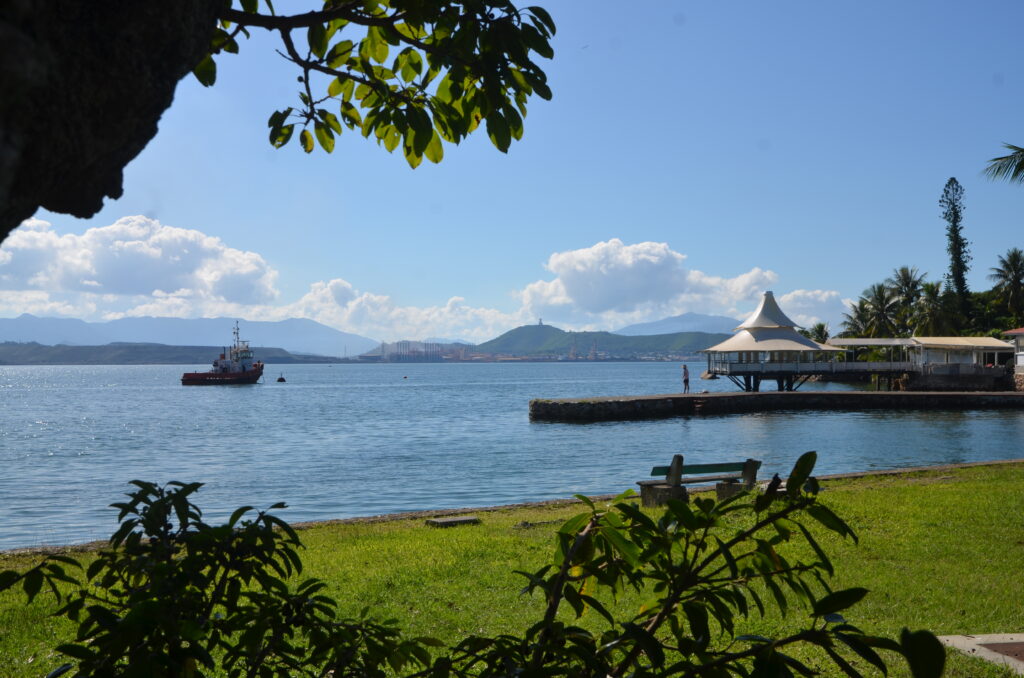
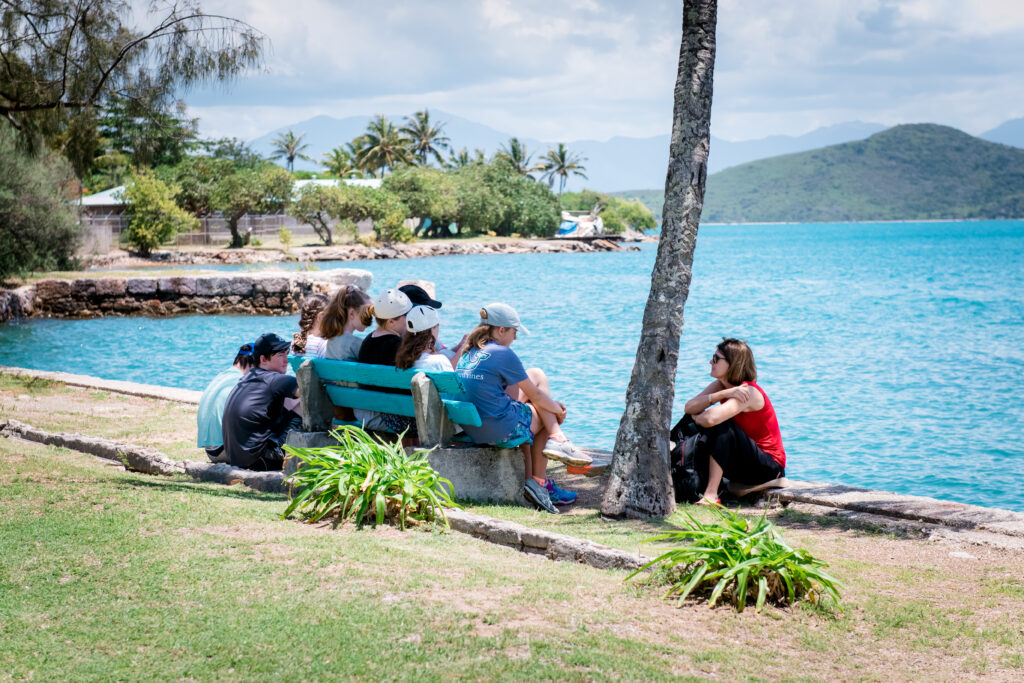
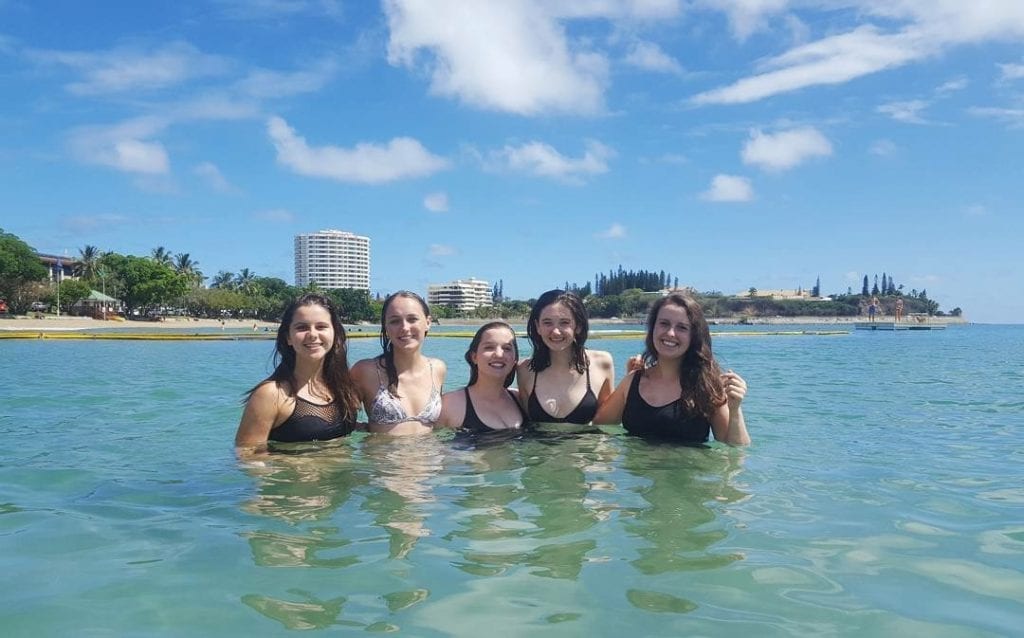
Experience ‘France in the Pacific’ as you study and live in Nouméa! Immerse yourself in the French language and culture without travelling all the way to France. Set in the stunning overseas territory of New Caledonia, this program blends language immersion with palm fringed beaches, vibrant reefs and lush mountains, all just a short flight from Australia.
When: June - July 2026 (Australian Winter Uni break) or November – December 2026
Where: Nouméa, New Caledonia
Duration: 2 or 4 weeks
Number of courses taken: Intensive French language course. 1 course (full‑time equivalent) per session
Student Eligibility: Students must be enrolled at an Australian university and be in good academic standing with a GPA of 4.0 (out of 7) or equivalent. Don’t meet this GPA? Reach out to our team to discuss possible options.
Syllabus: Go to the “Choose Your Course” section → Click the course you wish to view → Select the Read Course Syllabus link
Excursions: Yes, excursions vary from year to year
Free time: Yes, afternoons, weekends and evenings free for exploration
Accommodation: Included (shared or single room in a French speaking homestay)
Meals: Breakfast and dinner provided via homestay; some lunches included in the program
Arrival transport: Included (airport transfers within specified arrival window)
24/7 On‑site support: Yes, local program staff available throughout your stay
Application support: Yes, our Gold Coast (QLD) based team will guide you every step of the way
Pre‑departure support: Yes, you will receive detailed documentation, an online information session and access to a group chat
When should I apply: NOW! Spaces are limited and booking early ensures you get the session, accommodation and classroom level you prefer
More questions? Visit our FAQs page
Highlights
While you may have to see it to believe it, here are a few highlights of the program in New Caledonia to wet your appetite:
- Affordable and personalised French immersion language studies
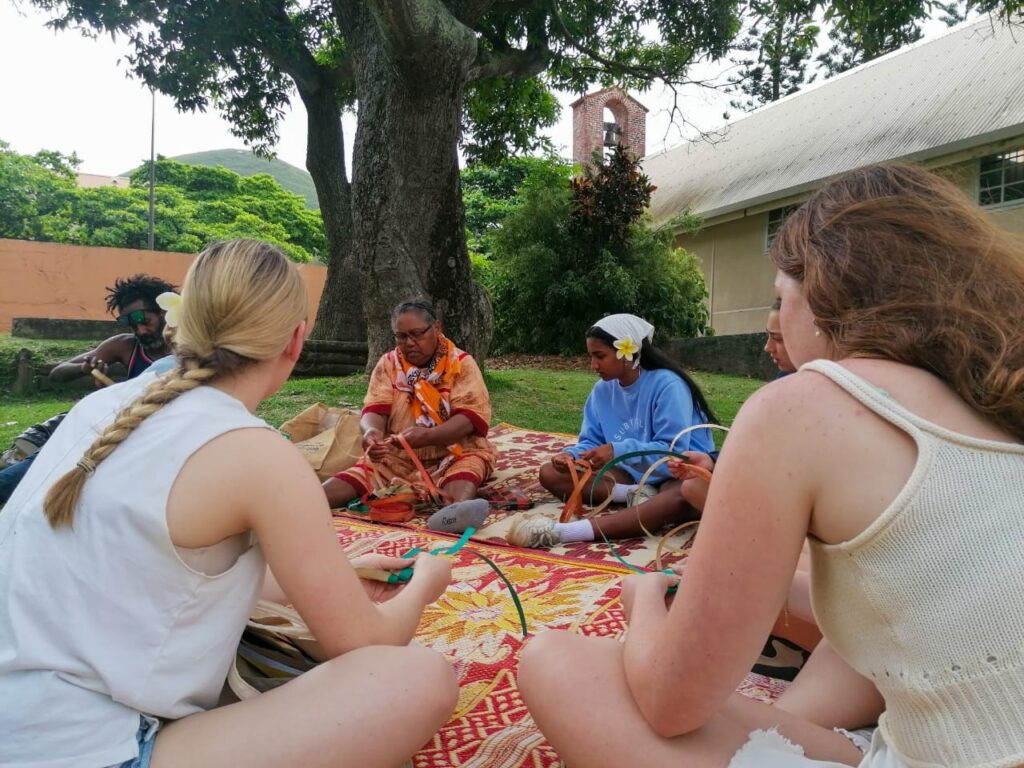
- Unique combination of French and French-New Caledonian culture
- Beautiful and tranquil study setting
- Pristine natural environments: reefs, lagoons, beaches, islets, forests, mountains and more!
- Warm and hospitable residents, including your homestay family
- Mega-diversity in ethnicities, cultures, ecosystems and landscapes
- Pleasant climate year-round with consistent sunshine
Choose Your Course
Gain practical language skills through intensive French language classes, at your level of instruction, tailored to your ability and learning goals.
Courses offered at CREIPAC follow the recommendations of the Common European Framework of Reference for Languages: Learning, Teaching and Assessment (CEFR), created by the Council of Europe in 2001. CEFR has been adopted worldwide in order to harmonise program conception and teaching.
Course Load:
- Take 1 course (subject/unit) with 15 – 18 hours of face-to-face instruction per week (2-week program has 30 – 36 contact hours total and the 4-week program has 60 contact hours total).
- Typical schedule has language instruction provided in the morning Monday to Friday
- Academic credit is awarded by your Australian University. CISaustralia will coordinate with the local host institute in New Caledonia to provide a certificate of completion and attendance with grades awarded for the four different skill levels (or domains) completed: Reading, Writing, Listening and Speaking.
Levels & Placement:
- The program offers six levels of French instruction based on the Common European Framework of Reference for Languages (CEFR): Beginner (A1–A2), Intermediate (B1–B2), and Advanced (C1–C2).
- A minimum number of students will be required for each language level.
- Before enrolment is confirmed, students will be required to complete an online placement process (in some instances your university academic may advise CISaustralia of your language level). This ensures you are placed in the class level that best aligns with your current language proficiency, helping to maximise your learning outcomes and ensure you are appropriately challenged throughout the program.
Credit Approval:
- To have your course approved you will need to speak with your course convenor (or equivalent ) and/or Learning Abroad office. Helpful support documents include course syllabus, program overviews and contact hours – that CISaustralia provide.
- University of Queensland students – Students must be at least level B1. This course is pre-approved for two (2) academic units of advanced French language. Please refer to your University of Queensland Course Convenor for more information or contact CISaustralia for guidance.
- University of Newcastle students – To be eligible for the program, University of Newcastle students should normally have completed at least one semester of study (FREN1100 or above). University of Newcastle students must also enrol in HUMA2001 for the Midyear Session for 10 units of academic credit. This shell course is part of the French Major/Minor, including the Diploma in Languages.
Academic Requirement: To qualify for this program, students must be in good academic standing with a GPA of 4.0 (out of 7) or equivalent. If your current GPA falls below the requirement, you may still be considered for the program but will need to be prepared to provide supporting documentation. Please contact us to discuss your situation.
Level A1: This course develops the basics of conversation, reading, and writing. Balanced attention is given to grammatical structures, vocabulary, and communicative skills. Learners will acquire vocabulary that enables them to participate in simple but useful everyday conversations, supporting and accompanying their progression in French.
- Simple sentences, limited vocabulary, basic comprehension
Level A2: This course reinforces the basics of oral and written communication and broadens the vocabulary necessary for everyday life. Learners practice telling simple experiences, expressing preferences, and interacting in social and practical situations (travel, shopping, housing). Balanced emphasis is placed on grammar, vocabulary, and communicative skills to strengthen fluency and confidence in French.
- Complete sentences, common vocabulary, beginning of nuance
Level B1: This course develops the ability to understand and produce clear messages on a variety of topics related to daily life, leisure, work, and current events. Learners practice expressing opinions, justifying choices, and recounting events using a range of verb tenses. Equal emphasis is placed on grammar, vocabulary building, and oral expression, with the aim of fostering communicative autonomy.
- B1: Complex sentences, precise vocabulary, coherence, and expression of opinions
Level B2: This course aims to refine learners’ ability to understand and produce speech that is well-structured, nuanced, and spontaneous. The topics covered (society, culture, current events, media, environment) help learners acquire richer and more precise vocabulary. Special attention is given to argumentation, complex grammatical structures, and fluency in both oral and written expression.
- B2: Fluency, varied register, natural interactions, fine and implicit comprehension
Level C1: This course consolidates an advanced command of French, both oral and written. Learners develop their ability to understand and analyze long and demanding documents (specialized articles, literary works, lectures). Emphasis is placed on fluency, precision, and adapting language register. Advanced grammar, lexical richness, and communication skills are integrated to promote clear, coherent, and nuanced expression.
- Advanced fluency, sophisticated vocabulary, nuanced and structured arguments, understanding of subtle meanings and implied ideas
Level C2: This course is designed for learners aiming for near-native mastery of French. It emphasizes subtlety, precision, and spontaneity of language in a variety of formal and informal contexts. Participants work on the critical analysis of complex texts, the production of academic and professional discourse, and the mastery of language registers. The goal is to perfect oral and written expression in order to achieve fluent and effective communication in all situations.
- Near-native mastery, complete control of language, effortless expression, ability to understand and produce highly complex texts and subtle nuances
Excursions
3 excursions are included in the program. These vary program to program and would usually include:
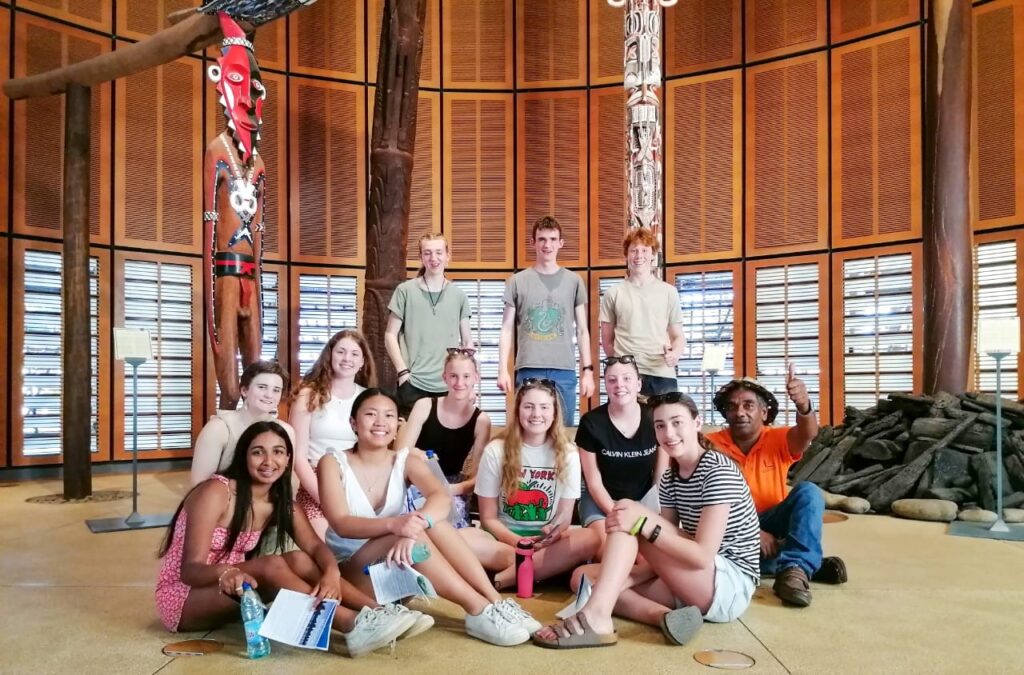
- Visit to the Tjibaou Cultural Centre
- Guided tour of the Former Penal Colony Museum
- City guided tour
Other places of interest past students have recommended that you may choose to visit (at own expense) include:
Aquarium des Lagons Nouvelle Caledonie: See species found in New Caledonian waters – including nautilus, sea snakes, stone fish, turtles, sharks and stingrays, as well as living coral displays. Don’t miss the emperor of coral reefs – the Napoleon fish.
Amédéé Lighthouse: After climbing the 247 cast-iron steps, you will be able to enjoy a breath-taking panorama over the beautiful turquoise water of the lagoon, the large reef and the mountains of Grande Terre.
Location
New Caledonia is a French overseas territory (specifically a ‘special collectivity’) in the Pacific Ocean, about a 2-hour flight northeast of Brisbane. The third largest archipelago in the Pacific (18,575 square km), New Caledonia is made up of the main island (Grande Terre), the Isle of Pines to the southeast, the Loyalty Islands (Maré, Lifou, Tiga and Ouvéa) to the east and finally, to the northwest, the Belep Islands and many other smaller islands.
Grande Terre is the largest and most densely populated island in the archipelago, and home to the capital city Nouméa. Along its entire length runs a mountain range, of which highest peaks rise to over 1,600m. The highest points in the range are covered with diverse and often unique forests, which are likely to have been Captain James Cook’s inspiration for the archipelago’s namesake, as he was reminded of the Scottish landscapes.
New Caledonia draws on a variety of cultural and ethnic influences, as it blends characteristics from Melanesia, Polynesia, Europe, Asia and even Africa. Of its roughly 290,000 inhabitants, the current demographic makeup of Nouméa nearly splits the majority between Kanak (original inhabitants of New Caledonia) and European descent. The archipelago’s diversity is reflected in additional ethnic groups, including Polynesian, Tahitian, Indonesian, Vietnamese, Chinese and Algerian.
New Caledonia has been called the ‘Island of Eternal Spring’, with its tropical ocean climate and consistent sunshine. There are 2 main seasons with very short spells in-between:
- The hot season from December to March with average temperatures around 25-27°C and brief tropical showers.
- The cool season from April to November with average temperatures around 20-23°C.
The CISaustralia program is based just outside of central Nouméa, New Caledonia’s capital and largest city. Albeit somewhat quaint (especially in comparison with the likes of Paris!), Nouméa offers all you need to enjoy yourself, including museums, shopping, sports activities, beaches, aquatic activities, hiking, etc., as well as amenities and conveniences you can expect from a city of about 170,000. You’ll have quick and easy access getting to and from the language centre, with central Nouméa about 10 minutes by bus.
The University
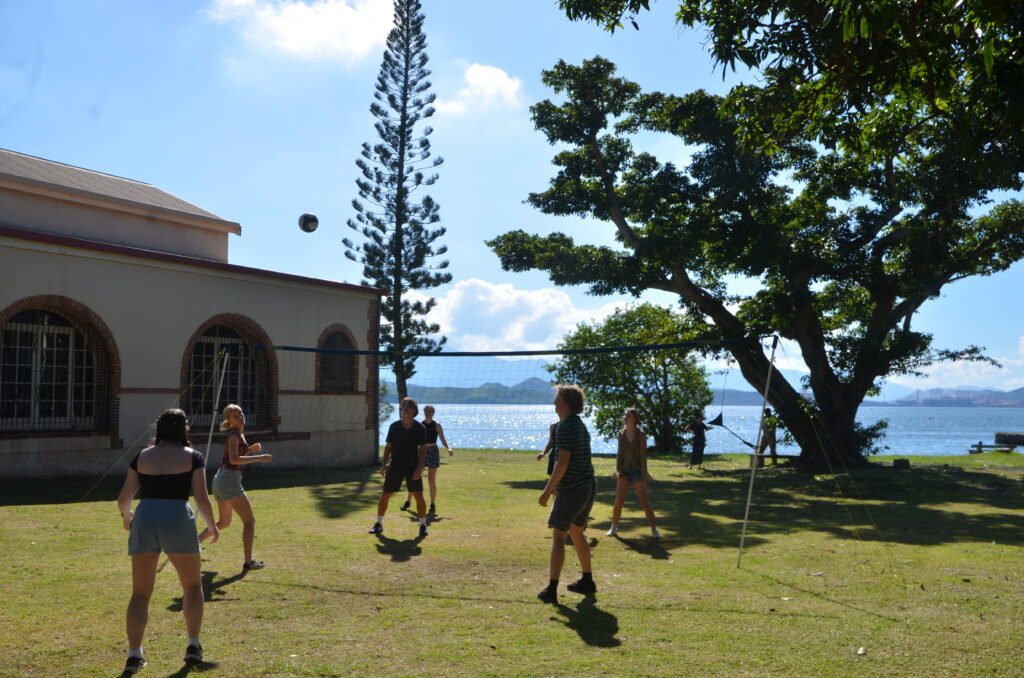
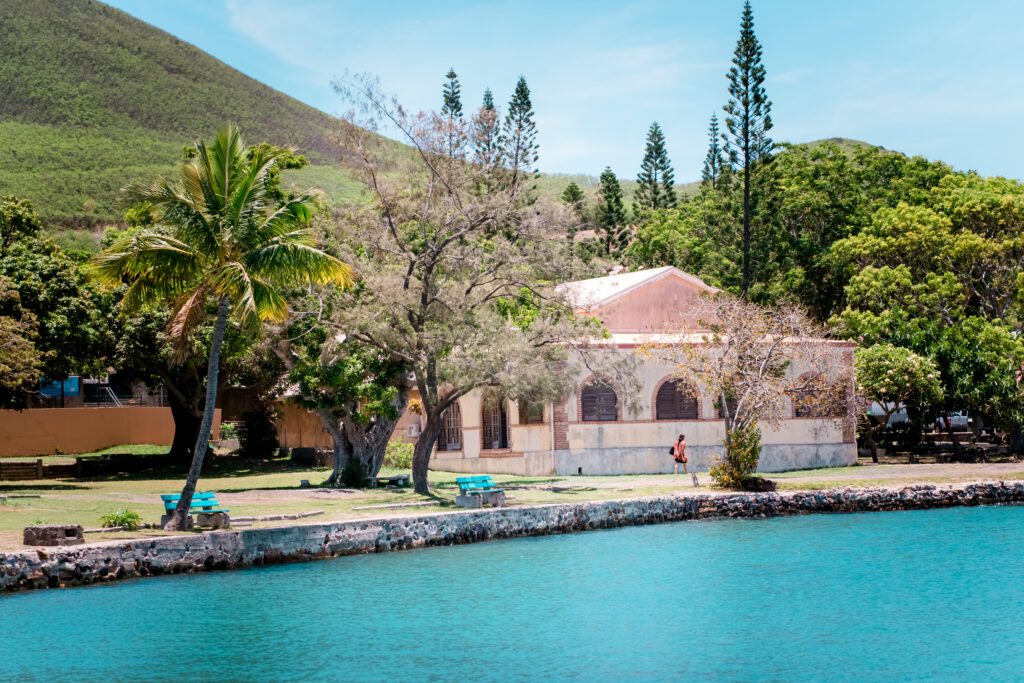
Founded in 1980, the Centre de Rencontres et d’Échanges Internationaux du Pacifique (CREIPAC) is dedicated to the promotion of the French language in the Pacific area. The Centre is located on a largely undeveloped peninsula just two kilometres west of Noumea, and consists of charming, old historical buildings by the sea, set amid frangipanis and palm trees.
Playing an active role for the past 20 years in French as a Foreign Language, CREIPAC developed a teaching style truly responding to learners’ needs. Courses offered at CREIPAC follow the recommendations of the Common European Framework of Reference for Languages: Learning, Teaching and Assessment (CEFR), created by the Council of Europe in 2001. CEFR has been adopted worldwide in order to harmonise program conception and teaching. Moreover, it offers an innovative approach in teaching, being more focused on the needs of the learners. It also allows a better standardisation of diplomas and certificates.
CREIPAC hosts approximately 1,500 students per year, with an average of 120 students at any given time. The majority of students are from Australia, New Zealand, Japan and Europe, as well as some local students. The language centre has a library stocked with novels, manuals, newspapers and comics – all in French. A study room is also available for use, with desks and computers with free internet access.
CREIPAC counts on friendly and experienced staff and instructors to create a warm and welcoming environment in which to learn French language while learning about French and French Caledonian culture.
Accommodation
Homestay accommodation
Students on this program will stay with a welcoming local family, where they will be fully immersed in New Caledonian culture. This is a great way to practice conversational or day-to-day French. Homestay rooms may be single or double share with another participant.
Homestay includes breakfast and dinner daily, and the family will drop you off at the school in the morning and pick you up from the meeting spot in town in the afternoon. Lunch will be included on weekend days where no excursion is scheduled. Please note that buses from class to town may be limited during the day and students may be required to pre-book a taxi to take to town in the afternoon.
Program Fee & Dates
| November - December 2026 (2 Weeks) | |
|---|---|
| Please see specific start dates below. | |
| Application Deadline | 06 October 2026 |
| Arrival Date | 22 November 2026 |
| Departure Date | 05 December 2026 |
| Application Fee | A$ 99 |
| Program Fee | A$ 4,999 |
| OS-HELP | A$ 8,442 |
| November - December 2026 (4 Weeks) | |
|---|---|
| Please see specific start dates below. | |
| Application Deadline | 06 October 2026 |
| Arrival Date | 22 November 2026 |
| Departure Date | 19 December 2026 |
| Application Fee | A$ 99 |
| Program Fee | A$ 7,999 |
| OS-HELP | A$ 8,442 |
| June - July 2026 (2 Weeks) - 2027 dates to be released | |
|---|---|
| Please see specific start dates below. | |
| Application Deadline | 08 May 2026 |
| Arrival Date | 28 June 2026 |
| Departure Date | 11 July 2026 |
| Application Fee | A$ 99 |
| Program Fee | A$ 4,999 |
| OS-HELP | A$ 8,745 |
Program fees include the following:
- CISaustralia support services before, during and after the program
- CISaustralia 24/7 on-site support – Site Director
- Assistance with travel arrangements
- Comprehensive pre-departure guide
- Comprehensive online pre-departure webinar session
- Airport pick-up and drop-off (on specified program dates within designated times)
- On-site orientation meeting
- Homestay accommodation with 2 meals provided per day
- Tuition fees (Generally 15 hours per week)
- All registration and enrolment fees
- Minimum 3 x Excursions/Activities
- Buddy Program: language sessions with local UNC students (at their availability)
- Wifi included – at accommodation and language centre
- Free computer use at language centre
- Access to independent self-learning language library and facilities
- Program risk matrix and risk assessment
- Risk Management and Emergency Response Plan
- Academic and Financial Advising by dedicated CISaustralia Program staff
- CREIPAC course completion certificate*
- CISaustralia Certificate of Participation (available on request)
*CREIPAC is a language institution, and as such, does not provide official university transcripts. If approved for academic credit, students can use their CREIPAC Certificate of Completion to show proof of having completed the program and related (4) core language skills with accompanying grades.
What is not included:
- Program application fee $99
- International Student Identity Card
- Flights (CISaustralia will provide recommended group flights and travel guidance via Flight Centre, our formal travel partner)
- Medical and/or Travel Insurance
- Visa fees and Vaccinations (if required)
- Meals (unless mentioned above)
- Extra travel/excursions (other than those mentioned above)
- Transport from the school to town each afternoon
Relative cost of living: You can expect to spend more for most consumables in New Caledonia than you would spend in Australia.
During breaks at the language centre you can access coffee, tea, hot chocolate, soft drinks and snacks from the institute for a small fee.
Dates are for reference only and are subject to change. Please do not book flights until you have received the confirmed dates in your acceptance paperwork.
CISaustralia reserves the right to alter fees at any time due to currency fluctuations and/or fee changes made by our overseas partner universities, institutes, colleges, NGO’s, charities or similar.